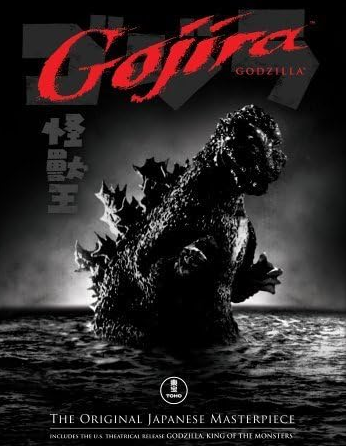
The original Godzilla movie was the first of its kind. The movie was adapted from a screenplay written by Shigeru Kayama, a writer known for his work in the horror and mystery genre. The movie’s writers, Ishiro Honda and Takeo Murata, adapted Kayama’s idea into the final script used in the film. Honda’s main change to the original script was the characterization of Godzilla. Originally Godzilla was like other horror creatures in literature and films that came before it (King Kong, The Beast from 20,000 Fathoms, Jira Monster, etc.) who played the role of an animalistic creature.
While Honda’s Godzilla still maintains animalistic features and instincts it stood apart through its personification of Godzilla into the embodiment of cultural fear. Future directors in the Godzilla franchise like Godzilla -1.0’s Takashi Yamazaki claimed that in modern adaptations having a more animalistic and horror-like depiction of Godzilla was important to the characterization of the creature to maintain its narrative impact. Honda’s Godzilla can be summed up as a nuclear monster only motivated by destruction.

In the 1954 Godzilla the creature was created from American nuclear testing on Odo Island off Japan. Godzilla’s creation is seen as a direct contradiction to any natural laws and the previously established social expectations set by World War One. The loss of a war creates a time of reexamining the current social structures and grappling with the changes to the previously perceived structures. The loss of a war forces a nation into a new stage in which they scramble to establish a new identity or dramatically alter the one they had previously. Godzilla utilizes this anxiety, forcing its conflict into the center of a national struggle to emphasize the socially divided present and create a creature inspired by those cultural fears.
Nuclear testing during this time is rationalized by the growing idea of “irrational forces”. The idea that certain forces existed as contrary to the currently standing system in such a way that their presence disturbing existing ideas. Nuclear testing was seen as something “subphysical” and so unnatural that it operated apart from rational social understandings of war. Godzilla’s character is an embodiment of the irrational forces of nuclear power.
Honda was born during World War One and while starting his film career was conscripted into the military to serve in Manchuria and later in China during World War Two. Honda’s later work is notable for being a respected director; his work was well liked both popularly and critically. Honda worked alongside other famous directors of his era during his time with Toho, including Akira Kurosawa. Ishiro Honda’s work was known to fit into a mold as films did not make any daring attempts to define themselves against the status quo. Instead, Honda operated within the trends of the films during his era along with the changing needs of his production company, Toho.
While Godzilla was revolutionary in its practical effects, its story was not particularly anti-war and did not take a major stance beyond its anti-nuclear sentiment. The shortcomings of the Japanese military are central in Honda’s films as he expresses his discontent with their failures during and after the war. However, these sentiments are not uncommon in films of the time with many similar films of the era being labelled as “enormously more sophisticated” in tackling the issues and complexities of World War Two and its aftermath.
Honda’s approach to filmmaking is a helpful lens for interpreting public sentiments during the times when his films released. By not standing out the audience can understand the Japanese view on the perspectives that came with the cultural opinions and major events during that period. This is evident in a film Farewell Rabaul that Ishiro Honda released less than a year prior to the release of Farewell Rabaul followed Japanese soldiers stationed at Rabaul who are growing tired of the war and fighting. It followed a strong heroic fighter who maintained his strength while handling his growing anti-war sentiments. Honda’s work in Godzilla follows a similar premise of the strength of character rising above the strength of outside forces, particularly the government. Halfway through Godzilla the Japanese military launches a full-scale attack at Godzilla which ultimately proves to be fruitless and leads to Godzilla only injuring more civilians.

Godzilla was the formative groundwork for Honda’s later work and the series as a whole. I represents his history of anti-war ideas with the larger than life creature who took on a life of his own. Godzilla worked as a horrifying culmination of Japanese cultural anxieties and fears.
Leave a Reply